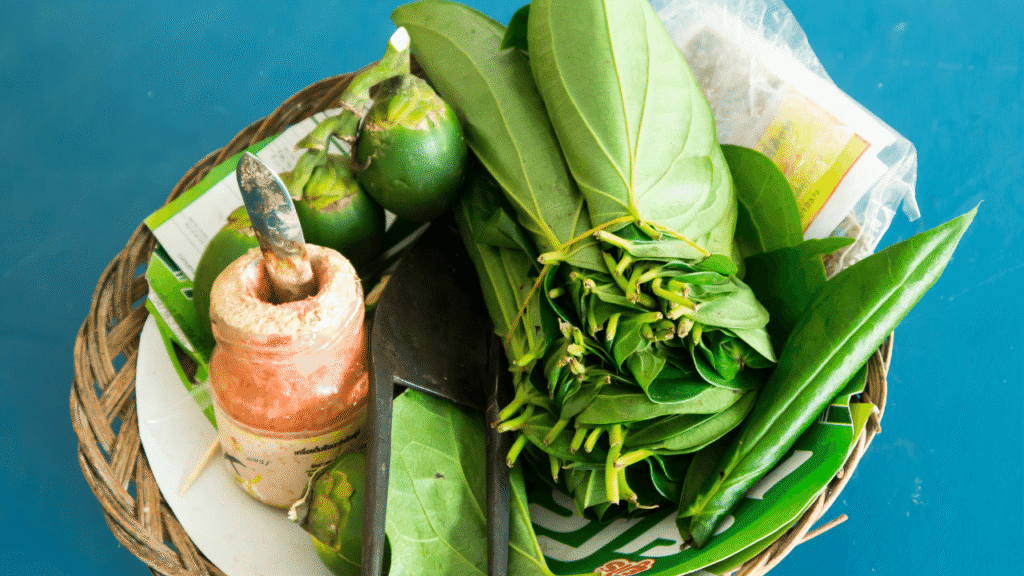
Oral submucous brosis (OSF) is a potentially malignant condition of the oral cavity characterized by progressive brosis of the submucosal tissues. OSF is typically associated with the use of betel quid (BQ), a chewing package made of natural products (e. g., areca nut, betel leaves), with or without smokeless tobacco.
Hence, this scoping review was an immediate evaluation of the existing literature regarding different BQ compounds and their associations with OSF. The repository of the National Library of Medicine (MEDLINE/PubMed), medRxiv databases, Google scholar, Baidu scholar, CNKI, and EBSCO were used to search for publications that investigated the association between BQ chewing and OSF up to November 2021. The search was conducted under the Preferred Reporting Items for Systematic Reviews and Meta-Analyses extension for Scoping Reviews (PRISMA-ScR) guidelines, together with clear inclusion and exclusion criteria. The review showed that the risk of developing OSF varied between different BQ recipes, and that chewing BQ mixtures containing betel in presence (BI) significantly increased the risk of OSF, as did the addition of tobacco.
Even though more research is needed to find out how each BQ ingredient affects the development of OSF, our pilot results show the scope and rationale for future chemopreventive strategies for OSF and oral cancer in BQ chewers.Introduction Globally, approximately 600 million people chew betel quid (BQ). Most of it is eaten in the Pacific Islands, South Asia, and Southeast Asia, where three fourths of it is eaten.Biomolecules malignant conditions of the oral cavity (OPMD), including oral submucous brosis (OSF), leukoplakia, erythroplakia, and lichen planusis a chronic, oral, potentially malignant condition that is characterized by juxta-epithelial inflammation, bio-elastic change in the lamina propria, and epithelial atrophy, all of which led to progressive stiffening of the oral mucosa.
Arecanut (AN) has been classified as an independent group human carcinogen and is commonly chewed as a betel quid (BQ) in the Asia-Pacific region as well as Asian migrant communities worldwide.Whilst not all BQs share the same constituents, the usual ingredients consist of AN, betel leaf (BL), catechu, and slaked lime, with or without tobacco. Variations are also known to exist, including the addition of betel (Piperbetle) stem and inorescence (BSandBI), and various additives. Traditionally, the four major caalkaloids, arecoline, arecaidine, guvacoline, and guvacine, are regarded as potentially responsible for OSF and oral carcinogenesis. These changes result in brosis of the underlying submucosa and are further associated with chronic inflammation and hypoxia. Intriguingly, our preliminary observations suggest that chewing BQ from certain areas of Indonesia is associated with a reduced risk of OSF, thus prompting the need to further investigate the effect of different variations of BQ. The aim of the present study is to systematically evaluate the existing literature regarding different BQ ingredients and their associations with the onset of OSF.
A search was conducted from all available literature up to the end of November 2021 using PubMed, medRxiv, Google Scholar, Baidu Scholar, CNKI, and EBSCO as the databases, and the keywords used were Betel quid, oral submucous brosis, and their associated terms. Inclusion and exclusion criteria the articles that were included in this study had the following criteria: (3) The BQ habit was practiced with or without tobacco; and (4) the odds ratio (OR) or relative risk (RR), along with their respective 95% confidence intervals (CI), were used to assess the association between the BQ habit and OSF. Articles were excluded for the following reasons: (1) studies used non-human samples; (2) studies were meta-analyses or systematic reviews; and (3) studies in which an OR measured the association between BQ habit and potentially malignant diseases but did not specifically mention OSF. In the second phase, papers were reviewed based only on their titles and abstracts, with help from the senior author (NC).
PRISMA, Preferred Reporting Items for Systematic Reviews and Meta-Analysis. Of the remaining 22 articles, 11 papers were excluded because they reported ORs that were not exclusive to OSF; the remaining 11 papers were deemed to be eligible for detailed assessment. An overview of the BQ mixtures and their association with OSF is given in the main article. The word “unspecified” is used to describe BQ mixtures for which the exact ingredients are not given in the article.
Join Our Prevention Movement
Be part of our community dedicated to oral health and early cancer prevention. Subscribe to get educational tips, event invitations, and program updates straight to your inbox.